Visit our Specials and Discounts page to see what promotions we're currently offering!
Learn MoreVisit our Specials and Discounts page to see what promotions we're currently offering!
Learn More
The Myth: It’s Normal for Cats to Vomit or Have Hairballs The Truth: It Could Be Intestinal Disease
- posted: Jan. 03, 2026
When Is Vomiting a Concern?
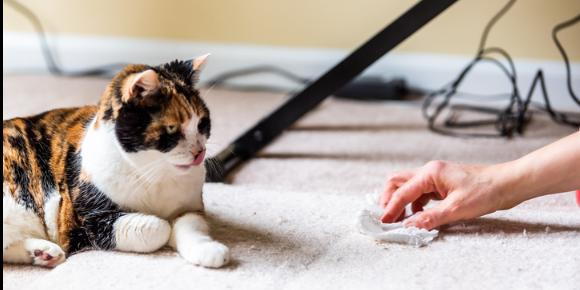
Vomiting in cats - whether its food, fluid or fur – may be a sign of a deeper issue. While occasional hairballs are common—especially in long-haired cats—vomiting more than twice a month, losing weight, or showing increased frequency should never be ignored. Vomiting is often the first visible symptom of a deeper gastrointestinal disorder that needs medical attention.
What Causes Chronic Vomiting in Cats?
Chronic vomiting may stem from:
- Food intolerances or allergies
- Ingestion of grass or indigestible material
- Gastrointestinal infections or parasites
- Serious conditions like IBD (inflammatory bowel disease) or cancer
At TLC Animal Hospital, we emphasize thorough diagnostics to uncover the root cause, starting with a detailed history, bloodwork, fecal testing, and ultrasound examination of the stomach and small intestine.
Inflammatory Bowel Disease (IBD) in Cats
IBD occurs when the intestinal lining becomes chronically inflamed, often due to an abnormal immune response to food or intestinal bacteria. In many cases, a definitive cause is never identified.
Common Signs of IBD:
- Weight loss
- Frequent vomiting or diarrhea
- Poor coat condition
- Lethargy
-Appetite changes (increase or decreased)
How We Diagnose IBD:
An ultrasound may show thickened intestinal walls, which suggests IBD or lymphoma. A surgical biopsy is the gold standard for diagnosis and allows our team to tailor the best treatment plan.
Treatment Options:
- Corticosteroids (e.g., prednisolone) to reduce inflammation
- Prescription diets designed for gastrointestinal support or food sensitivity
- Probiotics and vitamin B12 supplementation
- Dewormers
- Other medications to modulate the immune system and reduce intestinal inflammation
While IBD is not curable, many cats respond very well to treatment and can enjoy a high quality of life for years with proper management.
Intestinal Lymphoma in Cats
Lymphoma is a cancer of the lymphoid tissue, and the small intestine is the most common site in cats. It comes in two forms:
- Small cell lymphoma – slower growing, better prognosis
- Large cell (lymphoblastic) lymphoma – more aggressive, poorer outcome
Symptoms Overlap with IBD:
- Vomiting
- Diarrhea
- Appetite changes
- Weight loss
Treatment and Prognosis:
A biopsy is necessary to distinguish between IBD and lymphoma. Treatment aims for remission, not cure, and may include chemotherapy protocols. Cats with small cell lymphoma often achieve remission for two or more years, with up to 75% responding well.
Hairballs: Not Always Harmless
Many pet owners treat hairballs with over-the-counter diets or lubricants. However, persistent hairballs can be a symptom of IBD or lymphoma. These diseases slow intestinal motility, causing hair to accumulate in the stomach and intestines instead of passing through normally.
If your cat is not long-haired, vomits hairballs frequently (more than twice a month), or is not an active groomer, it’s time for a veterinary evaluation.
Early Diagnosis Can Prevent Cancer
Emerging evidence shows that untreated IBD can progress to lymphoma. At TLC Animal Hospital, we encourage early screening and proactive care to stop disease progression before it becomes life-threatening.
Trust TLC Animal Hospital With Your Cat’s Digestive Health
At TLC Animal Hospital in El Paso, we are experienced in feline care and provide advanced diagnostics, compassionate treatment, and long-term support for chronic intestinal disease. If your cat is vomiting more than usual, losing weight, or experiencing digestive issues, call us at (915) 592-6200 to schedule a consultation with our team today.
Compassionate care for your purring companion—because every hairball could be a clue.
- posted: Jan. 03, 2026
When Is Vomiting a Concern?
Vomiting in cats - whether its food, fluid or fur – may be a sign of a deeper issue. While occasional hairballs are common—especially in long-haired cats—vomiting more than twice a month, losing weight, or showing increased frequency should never be ignored. Vomiting is often the first visible symptom of a deeper gastrointestinal disorder that needs medical attention.
What Causes Chronic Vomiting in Cats?
Chronic vomiting may stem from:
- Food intolerances or allergies
- Ingestion of grass or indigestible material
- Gastrointestinal infections or parasites
- Serious conditions like IBD (inflammatory bowel disease) or cancer
At TLC Animal Hospital, we emphasize thorough diagnostics to uncover the root cause, starting with a detailed history, bloodwork, fecal testing, and ultrasound examination of the stomach and small intestine.
Inflammatory Bowel Disease (IBD) in Cats
IBD occurs when the intestinal lining becomes chronically inflamed, often due to an abnormal immune response to food or intestinal bacteria. In many cases, a definitive cause is never identified.
Common Signs of IBD:
- Weight loss
- Frequent vomiting or diarrhea
- Poor coat condition
- Lethargy
-Appetite changes (increase or decreased)
How We Diagnose IBD:
An ultrasound may show thickened intestinal walls, which suggests IBD or lymphoma. A surgical biopsy is the gold standard for diagnosis and allows our team to tailor the best treatment plan.
Treatment Options:
- Corticosteroids (e.g., prednisolone) to reduce inflammation
- Prescription diets designed for gastrointestinal support or food sensitivity
- Probiotics and vitamin B12 supplementation
- Dewormers
- Other medications to modulate the immune system and reduce intestinal inflammation
While IBD is not curable, many cats respond very well to treatment and can enjoy a high quality of life for years with proper management.
Intestinal Lymphoma in Cats
Lymphoma is a cancer of the lymphoid tissue, and the small intestine is the most common site in cats. It comes in two forms:
- Small cell lymphoma – slower growing, better prognosis
- Large cell (lymphoblastic) lymphoma – more aggressive, poorer outcome
Symptoms Overlap with IBD:
- Vomiting
- Diarrhea
- Appetite changes
- Weight loss
Treatment and Prognosis:
A biopsy is necessary to distinguish between IBD and lymphoma. Treatment aims for remission, not cure, and may include chemotherapy protocols. Cats with small cell lymphoma often achieve remission for two or more years, with up to 75% responding well.
Hairballs: Not Always Harmless
Many pet owners treat hairballs with over-the-counter diets or lubricants. However, persistent hairballs can be a symptom of IBD or lymphoma. These diseases slow intestinal motility, causing hair to accumulate in the stomach and intestines instead of passing through normally.
If your cat is not long-haired, vomits hairballs frequently (more than twice a month), or is not an active groomer, it’s time for a veterinary evaluation.
Early Diagnosis Can Prevent Cancer
Emerging evidence shows that untreated IBD can progress to lymphoma. At TLC Animal Hospital, we encourage early screening and proactive care to stop disease progression before it becomes life-threatening.
Trust TLC Animal Hospital With Your Cat’s Digestive Health
At TLC Animal Hospital in El Paso, we are experienced in feline care and provide advanced diagnostics, compassionate treatment, and long-term support for chronic intestinal disease. If your cat is vomiting more than usual, losing weight, or experiencing digestive issues, call us at (915) 592-6200 to schedule a consultation with our team today.
Compassionate care for your purring companion—because every hairball could be a clue.
Office Hours
Monday
8:00 AM - 5:30 PM
Tuesday
8:00 AM - 5:30 PM
Wednesday
8:00 AM - 5:30 PM
Thursday
8:00 AM - 5:30 PM
Friday
8:00 AM - 5:30 PM
Saturday
8:00 AM - 12:00 PM
Sunday
Closed
Walk In Hours
In case of emergency or an urgent health need after posted walk-in times, please call or consult with the front desk to check doctor availability
Monday
8:00 am - 4:30 pm
Tuesday
8:00 am - 4:30 pm
Wednesday
8:00 am - 4:30 pm
Thursday
8:00 am - 4:30 pm
Friday
8:00 am - 4:30 pm
Saturday
8:00 am - 10:00 am
Sunday
Closed